|

A Nuisance
Pest, but not harmful
Box Elder
Bugs cause concern in the autumn when they gather in considerable
numbers on the
warm outside walls of homes and sometimes find their way into houses looking for
a suitable place to over winter. (Click photo to enlarge)
When
they gain entry to buildings through cracks or other openings they remain in
wall cavities and will occasionally emerge inside the home in the spring.
They will not breed indoors, so there is no danger of starting an “infestation”.
They cause no structural damage whatsoever but they can
“spot” interior furnishings with their droppings. They can't bite, they don't eat anything on the inside of your house,
including house plants, and they won't harm you, your family or your pets.
Identification

This bug is about 1/2 inch long and 1/3
as wide. It is black with three red lines on the thorax, a red line along
each side, and a red line on each wing. The wings lie flat on the back when
at rest.

Eggs are a rusty red color and are not often seen as they are deposited on
boxelder trees.

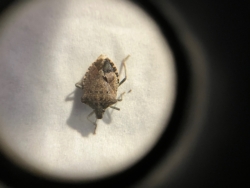
The young nymphs are red and gray. The population of bugs may number into the
thousands. resemble adults but do not have fully developed wings and are not
able to reproduce. The change from nymph to adult is a gradual one.
A case of mistaken identity.
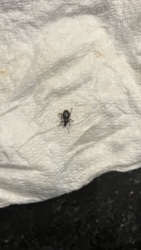
Box Elder bugs (on the left) are sometimes confused with another insect
called Milkweed Bug (on the right).
Click on photo to enlarge. |
 |
Life Cycle:
The adult bugs lay eggs on the host trees in the spring and
the nymphs emerge in a few days. The nymphs are small and show more red than
adults. These nymphs develop into adults during the summer, then mate and lay
eggs which hatch into the nymphs of the second generation. In
the summer Box elder bugs normally feed on the leaves, flowers, and seed pods of
the boxelder tree or silver maple. The bugs cause little damage to trees. Activity of nearly
fully grown nymphs is noticed in August and September when they gather in large
numbers on the trunks of box elder trees. The migration of the adults begins at
this time.
Prevention and control:
An obvious way to avoid infestations by this pest in residential properties is
to get rid of near-by female boxelder trees. If this species is to be
planted as an ornamental or shade tree, male trees should be purchased from the
nursery. They are propagated by cuttings from staminate trees. Chemical control
can best be obtained by spraying the nymphs on the host trees before the adults
have had a chance to migrate. Power spray equipment is usually required and a
professional should be hired to do the job safely.
Summer and fall
Once Box elder bugs have moved into the cavities of a home in the fall, there is
little that can be done to eliminate them. Control or exclusion must be
done in the summer and fall. Removing all boxelder trees in an area
will prevent breeding. Caulking windows and doors, and repairing window and door
screens will prevent bugs from entering a home. If you decide you would like to
spray for control, one home remedy is to use a 3-4% mix of water and soap (by
volume) that can be sprayed directly on the insects. Remember however that soaps
only kill on contact.
In extreme cases have a
pest control professional apply a residual insecticide
to exterior walls in the fall where the bugs are congregating - this will tend
to discourage them from landing. Insecticides are not very effective after the
weather turns cold.
Winter and spring.

When the bugs decide it's time to leave the cavities in a home, some of them may
be attracted to
the warm atmosphere in you living space. They want to get
outside but inadvertently end up inside. A good way to eliminate them is to
vacuum the bugs up with a long hose attachment. If
you squash them they may stain the walls or fabric. Remember they are
harmless to humans and homes.
A typical question on our "Ask
the experts pages"
| Q872
I manage an apartment complex and we have a problem with box elder bugs
getting in the basements does any one know of a preventative measure
besides caulking we can take to help eliminate the problem. Someone
suggested washing powder does anyone have any feed back on this?
Sue. |
| In the fall when they
gather on the outside walls, spray them with soapy water. This will reduce
the populations but some will still enter the wall cavities if you don't
seal all the cracks. They will leave the building cavities in the spring,
but some may find their way inside. They do not bite and they will not
harm the building.
|
|
|

Get rid of pests for good—guaranteed. Terminix® treats both the inside and
outside of your home—to eliminate all the pests, even the ones you can’t
see.
Click here to learn more
|
Ants,
Ant nest photos
Ask the
experts,
Bats,
Bedbugs
Bees,
Birds,
Box Elder Bugs
Carpenter Ants,
Canadian Pest Management
Association,
Carpenter ant photos
Carpet
beetles
Centipedes
Choosing a pro,
Classified ads,
Clothes moths
Clover Mites
Cockroaches,
Controlling pests,
Employment ads,
Finding a Pro,
Fleas,
Hantavirus,
Home page,
Insects,
I.P.M. ,
Ladybugs
Mice,
Moles,
Moths,
Mould
Other pests,
Pest Control Products
Pest pro
Associations,
Pharaoh Ants
Pill Bugs
Powder
post beetles,
Raccoons,
Rats,
Real Estate & Pests,
Rodents,
Snakes,
Sow Bugs
Spiders
SPMA of BC,
Supplies for
pest control,
Termites
Wasps
Wasp Traps
Wildlife pests
|