
Bees, Hornets and Wasp control
How to avoid stings and what to do if you get stung.
Identification
 Wasps have a slender body with a narrow waist, slender, cylindrical legs, Wasps have a slender body with a narrow waist, slender, cylindrical legs,  and appear smoothed-skinned and shiny. Yellowjackets, boldfaced hornets, and paper wasps are the most common types of wasps encountered by people. and appear smoothed-skinned and shiny. Yellowjackets, boldfaced hornets, and paper wasps are the most common types of wasps encountered by people. |
 Bees are robust-bodied and very hairy compared with wasps. Their hind legs are flattened for collecting and transporting pollen. Bees are important pollinators. Bees are robust-bodied and very hairy compared with wasps. Their hind legs are flattened for collecting and transporting pollen. Bees are important pollinators. |
Life Cycle of Wasps and Bees
Wasps and bumble bees have annual colonies that last for only one year. The colony dies in the fall with only the newly produced queens surviving the winter. The new queens leave their nests during late summer and mate with males. The queens then seek out overwintering sites, such as under loose bark, in rotted logs, under siding or tile, and in other small crevices and spaces, where they become dormant. These queens become active the following spring when temperatures warm. They search for favorable nesting sites to construct new nests. They do not reuse old nests.
Honey bees are perennial insects with colonies that survive more than one year. Honey bees form a cluster when hive temperatures approach 57° F. As the temperature drops, the cluster of bees becomes more compact. Bees inside this mass consume honey and generate heat so that those in the cluster do not freeze. As long as honey is available in the cluster, a strong colony can withstand temperatures down to -30° F. or lower for extended periods.
Control of Nests
The first step in wasp or bee control is to correctly identify the insect and locate its nesting site. An experienced pest control service may provide wasp or bee control service or you can use the following information to attempt to control them yourself. ( Directory of Canadian Pest Professionals)
Wasps
The best time of the year to control wasps is in June after the queen has established her colony and while the colony is still small. But because nests are small, they are also harder to find. The best time of the day to control wasp nests is at night, when they are less active.
Exposed wasp nests
Wasp nests that are visible and near human activity can pose a potential problem. If there is a concern about stings, you should eradicate the nest.
Apply a ready-to-use aerosol “wasp and hornet spray” into the entrance of the nest during late evening according to label directions. To avoid pesticide falling down on yourself do not stand directly under the nest and spray up. Plan your escape route. Be very careful if you must climb a ladder. If live wasps are still observed the next day, repeat the treatment.
Mechanical control without insecticides is possible for small, exposed nests. At night, cover the nest with a large, heavy, plastic bag and seal it shut. Cut the nest from the tree and freeze it. Use caution: there is more risk involved in this procedure than in spraying the nest.
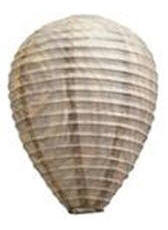 Do fake wasp nests help?
Yes and No! These nests supposedly deter wasps from building a nest near them because of the territorial nature of these pests. If the nests are placed early in the season when overwintering females wasps are looking for a nesting site, they may be effective. Placing the nests later in the summer where you don’t want wasps will have little or no effect because wasps are no longer looking for a nesting location. Some people claim wasps will still build new nests in the spring close to the fake wasps. Try it yourself but don’t waste time and money placing them in mid to late summer.
Ground wasp nests
When yellowjackets are found nesting in the ground, first try pouring a soap and water solution into the entrance. Many types of soap will work, including dish and laundry soap. (Do this at night)
If that doesn’t work, apply an insecticide into the nest opening. Be sure you use a product that is registered for use in lawns or soil. After you are sure all the wasps have been exterminated, cover the nest entrance with soil.
Concealed wasp nests
The most challenging nests to control are those that are concealed in voids behind walls or in attics. Often, the only evidence of the nest is wasps flying back and forth through a crack or hole in the home.
It may be wise to hire someone experienced to exterminate a wasp nest. Contact a pest professional service listed in our directory. Aerosol insecticides usually do not work very well on hidden nests.
Old wasp nests
Old nests are not reused by wasps. Wasp nests found during winter or early spring are old nests from the previous summer. There are no live wasps in the nest; they have already left or died inside it. The nest can be safely removed and disposed of if desired.
Honey bee nests
Honey bees are normally housed in manufactured hives and managed by beekeepers. In some instances wild colonies of honey bees may nest in hollow trees or in wall voids. Honey bees may become a nuisance in the spring at bird feeders and swimming pools as they forage for water. They seldom, if ever, are a nuisance in summer or early fall.
Wild colonies can be treated with the same insecticides and methods as described for exposed or concealed wasp nests. Control of honey bee nests can be challenging. Consider hiring an experienced pest control service if a honey bee job appears too difficult. ( Directory of Canadian Pest Professionals)
Bumble bee nests
When a bumble bee nest is a nuisance, treat it with the same insecticides and methods as described for ground-nesting or concealed wasp nests.
Ground-nesting bees
There are other types of bees you may encounter that do not form colonies. Solitary andrenid bees are common ground-nesting bees. They are also important pollinators of native plants. They usually nest in sun-exposed, dry areas of yards. Although there is just one bee per nest, many of these bees typically nest close to each other. They are usually most conspicuous to the public during spring. Although many ground-nesting bees may be found flying around their nests in the spring, they are gentle and very rarely sting people. Sprinkling the area of their nests with water may be enough to encourage them to move as they avoid damp areas. The same insecticides that control ground-nesting yellowjackets and bumble bees are effective against andrenid bees.
Bald Faced Hornet Nest


Wild Bees
Description
These small- to medium-sized bees may be any of a wide range of colors: metallic red, black, blue, green, or copper. Usually no distinctive spots or bands are present. Length ranges from 8.5 to 17 mm.
Several wild bee species build nests in the soil. They are most common, in soils with sparse to moderate plant growth, little organic matter, and good drainage.
Essentially beneficial insects, wild bees feed on the nectar of many plants and gather pollen for the larvae to feed upon and are excellent pollinators of vegetable and fruit crops.
They prefer to nest in soils with a sparse vegetative cover, As the bees tunnel in the soil, the excavated dirt forms mounds 1.5 to 6.0 cm wide and 0.25 to 1.5 cm high. The bees are often exterminated out of fear of their stinging but Wild bees seldom sting unless stepped upon or squeezed.
Wild bees generally overwinter in their soil burrows as adults. They emerge by early April and begin digging new burrows. The burrow consists basically of a vertical shaft 8 to 15 cm deep. The number and size of side tunnels varies with the particular bee species. Unlike some bees, soil-nesting species are not social in that each female makes her own nest, provisions it with food, and lays eggs. There is no worker caste. The bees, however, are gregarious and often nest closely together. However, there is no “nest guarding” instinct.
Wild bees first begin to fly in early spring. Mating takes place soon afterwards and females begin storing pollen in burrows. Furnishing each cell of their burrow with a pollen ball 3 to 5 mm in diameter, females then deposit a single egg on each pollen ball. Eggs hatch in early May. Throughout the summer, the larvae feed and develop within the burrows. Pupation occurs in later summer, usually in August. With some species, adult bees develop sometime in the fall but remain in their burrows to overwinter. Other species overwinter as larvae. A single generation is completed each year.
Orchard Bees: Natures best pollinator

The orchard mason bee is a gentle beneficial insect that has potential as a pollinator of apples, cherries, and other tree fruits. It is found throughout most of North America, particularly in wooded areas but often around homes in towns and cities.
Homeowners sometimes become concerned when they see the bee entering cavities under shake siding or investigating nail holes or other cavities in wood during April, May, and June. These are not destructive insects, since they do not excavate holes in the wood. Therefore, no controls are recommended, although holes may be filled with caulking to prevent the bee from nesting.
The orchard mason bee is slightly smaller than a honey bee and a shiny dark blue in color. Males are smaller than females (Fig. 2) and have longer antennae and an additional tuft of light colored hairs on the face. Females have hairs on the underside of the abdomen adapted for carrying pollen.
This Bee Is Gentle
The orchard mason bee is non-aggressive and will sting only if handled roughly or if it should get trapped under clothing. It is less objectionable than the honey bee as a pollinator in urban areas and should be encouraged. Efforts are being made experimentally to develop large populations of these bees to use as a supplement to honey bees for fruit pollination, much as the alfalfa leafcutting bee was developed for alfalfa seed pollination.
How to avoid stings.
How to avoid stings and what to do if you get stung.
Wasps and bees sting to defend themselves or their colony. Stinging involves the injection of a protein venom that causes pain and other reactions.
Wasps and bumble bees can sting more than once because they are able to pull out their stinger without injury to themselves. If you are stung by a wasp or bumble bee, the stinger is not left in your skin.
Honey bees have barbs on their stinger which remain hooked in the skin. The stinger, which is connected to the digestive system of the bee, is torn out of the abdomen as the bee attempts to fly away. As a result, the bee soon dies. If you are stung by a honey bee, scratch out the stinger (with its attached venom gland) with your fingernail as soon as possible. Do not try to pull out the stinger between two fingers. Doing so only forces more venom into your skin, causing greater irritation.
Most people have only local reactions to wasp and bee stings, although a few may experience more serious allergic reactions. Local, nonallergic reactions range from burning, itching, redness, and tenderness to massive swelling and itching that may last up to a week. These local reactions can be treated with ice, vinegar, honey, meat tenderizer, or commercial topical ointment to relieve the itching. An allergic reaction may include hives or rash, swelling away from the sting site, headache, minor respiratory symptoms, and stomach upset. These allergic reactions are not life-threatening and can be readily treated with an antihistamine.
Very rarely, a person may suffer a life-threatening, systemic allergic reaction to a bee or wasp sting, which can cause anaphylactic shock (fainting, difficulty breathing, swelling, and blockage in the throat) within minutes of being stung. These systemic symptoms are cause for immediate medical attention. People with known systemic allergic reactions to bee or wasp stings should consult with their physician to obtain an Epi-PenTM or Ana-Guard Sting KitTM to carry with them at all times. The venoms of bees and wasps are different, so having a severe reaction to a wasp sting does not mean a person will have the same reaction to a bee sting.
Wasp Stings In most people, a yellowjacket sting produces an immediate pain at the site of the sting. There will be localized reddening, swelling, and itching. Ice or analgesic creams often relieve the symptoms.
IF YOU ARE STUNG
1. Apply cold water or ice in a wet cloth 2. Lie down 3. Lower the stung arm or leg 4. Do not drink alcohol
Some people experience an allergic reaction to yellowjacket venom. Allergic (anaphylactic) shock can be fatal if untreated. Symptoms usually occur 10-20 minutes after a sting but may appear up to 20 hours later. If you experience any of the following symptoms after being stung, obtain medical aid immediately.
SYMPTOMS OF ALLERGIC REACTIONS
- Hives
- Widespread swelling of limb
- Painful joints
- Wheezing
- Faintness
WHAT TO DO
- Lie down; victim should not be moved
- Lower the stung arm or leg
- Apply ice
- Do not drink alcohol
- Apply a wide cloth tourniquet between sting and the heart (should be able to place 2 fingers under bands); release after 5 minutes
- Get medical aid
Bee Stings
The danger of bee stings: The two greatest risks from most insect stings are allergic reaction (which occasionally, in some individuals could be fatal) and infection (more common and less serious).
What to do if you are stung: If you have been stung by a bee, wasp, hornet, or yellow jacket, follow these instructions closely:
- Bees leave behind a stinger attached to a venom sac. Do not try to pull it out as this may release more venom; instead gently scrape it out with a blunt-edged object, such as a credit card or dull knife.
- Wash the area carefully with soap and water. This should be continued several times a day until the skin is healed.
- Apply a cold or ice pack, wrapped in cloth for a few minutes.
- Apply a paste of baking soda and water and leave it on for 15 to 20 minutes.
- Take acetaminophen for pain.
Other remedies for pain and itching may include:
- dabbing on a tiny amount of household ammonia. Over-the-counter products which contain ammonia are also available for insect stings.
- taking an over-the-counter antihistamine, if approved by your physician. Be sure to follow dosage instructions for children.
When to seek medical attention: Seek immediate medical attention if you are stung in the mouth or nose as swelling may block airways. Also seek emergency care if any of the following symptoms are present, as these could indicate an allergic reaction:
- large areas of swelling
- abnormal breathing
- tightness in throat or chest
- dizziness
- hives
- fainting
- nausea or vomiting
- persistent pain or swelling
How to Avoid Bee Stings
As summer temperatures rise, the population of flying insects increases. Many of these can be serious pests as well as beneficial. We should consider avoidance rather than elimination of pollinators.
Avoiding a stinging incident
Stay away from honey bee colonies. Because honey bees nest in such a wide variety of locations, be alert for groups of flying bees entering or leaving an entrance or opening. Listen for buzzing sounds. Be especially alert when climbing, because honey bees often nest under rocks or within crevices within rocks. Don’t put your hands where you can’t see them.
If you find a colony of bees, leave them alone and keep others away. Do not shoot, throw rocks at, try to burn or otherwise disturb the bees. If the colony is near a trail or near areas frequently used by humans, notify your local office of the Parks Department, Forest Service, Game and Fish Department, even if the bees appear to be docile. Honey bee colonies vary in behavior over time, especially with changes in age and season. Small colonies are less likely to be defensive than large colonies, so you may pass the same colony for weeks, and then one day provoke them unexpectedly.
Wear appropriate clothing. When hiking in the wilderness, wear light-colored clothing, including socks. Avoid wearing leather clothing. When they defend their nests, Honey bees target objects that resemble their natural predators (such as bears and skunks), so they tend to go after dark, leathery or furry objects. Keep in mind that bees see the color red as black, so fluorescent orange is a better clothing choice when hunting.
Avoid wearing scents of any sort when hiking or working outside. Africanized honey bees communicate to one another using scents and tend to be quite sensitive to odors. Avoid strongly scented shampoo, soaps, perfumes, heavily scented gum, etc. If riding, avoid using fly control products on your horse with a “lemony” or citrus odor. Such scents are also known to provoke or attract honey bees.
Be particularly careful when using any machinery that produces sound vibrations or loud noises. Bees are alarmed by the vibration and/or loud noises produced by equipment such as chain saws, weed eaters, lawn mowers, tractors or electric generators. Honey bees may also be disturbed by strong smells, such as the odor of freshly cut grass. Again, check your environment before you begin operating noisy equipment.
Pet safety. When hiking it is best to keep your dog on a leash or under close control. A large animal bounding through the brush is likely to disturb a colony and be attacked. When the animal returns to its master, it will bring the attacking bees with it. At home, be careful not to tie or pen animals near honey bee hives. The animals receive numerous stings because they can’t escape the bees. If your animals or pets are being stung, try to release them without endangering yourself.